THE
Identity Architecture
Insitute
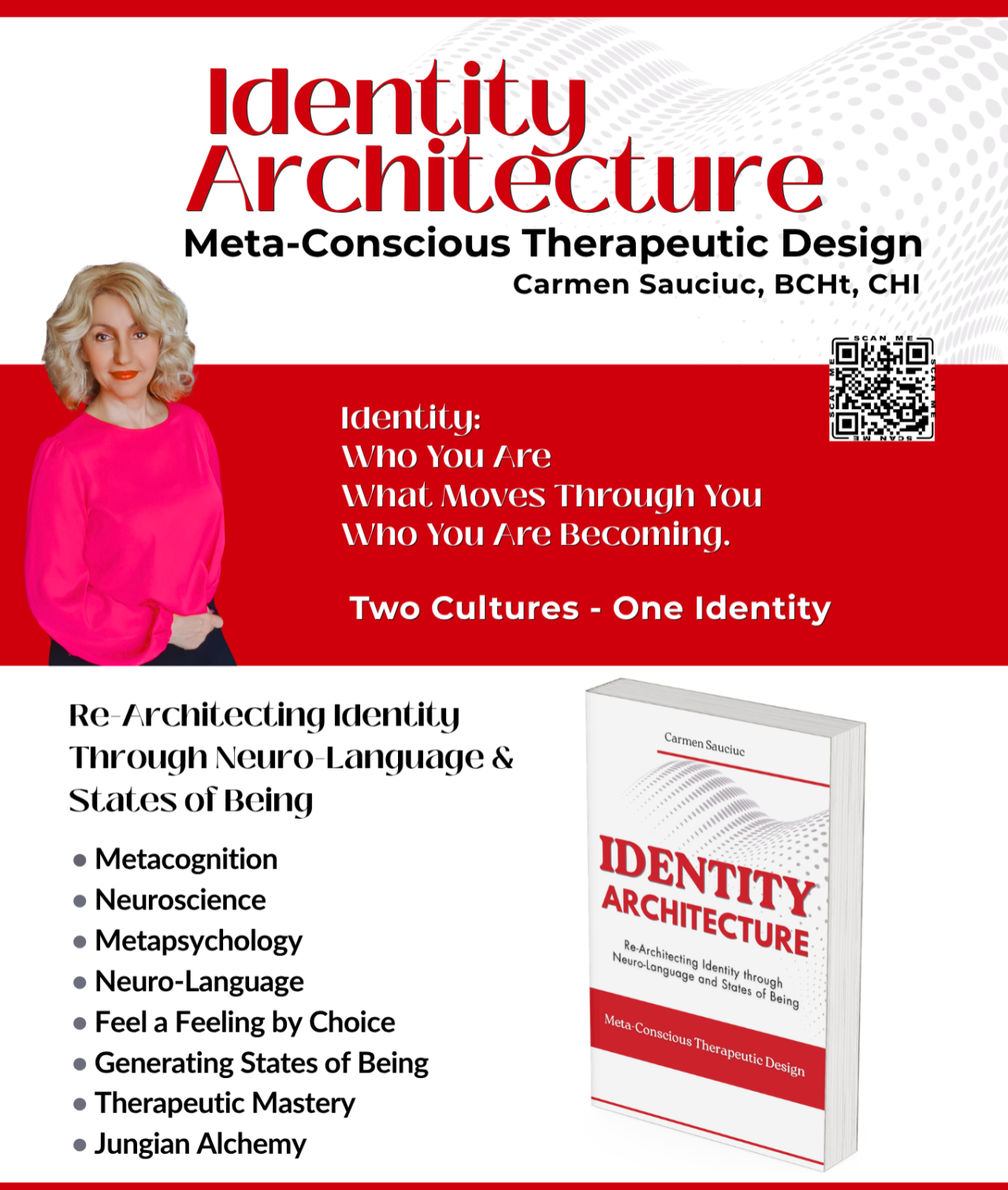
Re-Architecting Identity Through Neuro-Language and States of Being
Identity is Who You Are, What Moves Through You, and Who You Are Becoming.
Identity is not only your personality. It is not only your story, your beliefs, your emotions, your past, or your behavior.
Identity is the inner architecture through which you experience yourself, relate to others, respond to life, and decide what feels possible for you.
Some parts of identity are chosen.
Many parts are learned.
Some were shaped by family, culture, relationships, protection, fear, rejection, success, failure, social roles, and the need to belong.
Over time, what is repeated can begin to feel like “this is just who I am.”
But it may not be who you are. It may be what has been moving through you for a long time.
At the center of Identity Architecture is The Self.
The Self is the deeper “you” that can observe. Identity is the current architecture being experienced. Identity Architecture works with the patterns that shape identity so a person can begin to recognize what is automatic, what is protective, what is inherited, what is socially projected, and what no longer belongs to who they are becoming.
This work moves beyond symptom management by using Metacognition, Neuro-Language, Word Triangles, and the intentional generation of States of Being to re-architect the inner conditions that shape experience.
Identity Architecture does not ask only, “How do I feel?” It asks the deeper question: Who am I becoming?
Re-Architecting Identity Through Neuro-Language and States of Being Training teaches you how to recognize what has been mapping your life, where identity decay begins, and how to architect Who You Are Becoming by generating new States of Being through Metacognition and Neuro-Language.
Identity Architecture works on the structure that generates identity.
It changes the internal conditions that make particular thoughts, reactions, behaviors, and versions of The Self become automatic.
When those conditions change, identity reorganizes to wholeness.
Identity Architecture is Structural
Identity Architecture changes the structure beneath the pattern.
It does not begin by asking how to improve one reaction, role, habit, or behavior.
It asks what internal structure keeps producing it. When the structure changes, what once required constant effort can begin to change naturally.
Examples:
Example: The kitchen
Identity Architecture is designing the kitchen layout, not simply cooking a better meal. The location of the sink, stove, counters, and storage quietly determines how movement happens inside the kitchen.
A poor design makes every meal require more effort, regardless of how good the recipe may be.
Example: The house
Identity Architecture is designing the foundation, plumbing, and electrical system, not repeatedly patching the same crack.
A repair may improve the surface. But if the foundation or load distribution remains unchanged, the crack may return.
Example: The traffic system
Identity Architecture is designing the intersections, traffic lights, lanes, and road flow, not helping one driver change lanes.
Drivers respond to the larger system around them. When the design changes, movement changes throughout the system.
Why it matters:
Individual reactions do not exist alone.
They occur inside a larger internal design that quietly determines what becomes easy, difficult, repeated, or inevitable.
Identity Architecture works with that design.
Identity Architecture is Generative
Identity is continually being generated.
Identity Architecture does not treat identity as a fixed object that must be repaired.
It examines how a particular version of The Self is being produced, reinforced, and stabilized.
The question becomes:
What different conditions would allow another version of The Self to emerge?
Identity can stabilize through repeated:
How is this identity being generated?
- attentional patterns
- emotional-feeling states
- internal meanings
- self-concepts
- bodily responses
- relationship patterns
- habits
- enacted roles
- responses under stress
When these conditions repeat together, they begin to feel familiar.
What feels familiar can begin to feel natural.
What feels natural can begin to feel like who you are.
What changes?
Identity Architecture reorganizes:
- where attention repeatedly rests
- which emotional-feeling states are available
- how the person stabilizes under stress
- how different parts of experience operate together
- what the nervous system begins to recognize as familiar
Identity Architecture is System-Level
Identity is not one thought, one feeling, one role, or one story.
It is a living system.
Identity Architecture works across the interacting conditions that shape who a person becomes, rather than isolating one symptom or one part of the person.
The 360° Identity Architecture:
Where subconscious repeatedly rests and what it excludes.
Cognitive Identity
The stories, beliefs, meanings, and self-concepts through which a person understands themselves.
Emotional Identity
Core affective patterns and emotional reflexes that become familiar and automatic.
Somatic Identity
Posture, tension, breathing, movement, and the body’s internal sense of who the person is.
Relational Identity
Who a person becomes in the presence of another person.
Behavioral Identity
Roles, habits, routines, and the version of The Self repeatedly enacted through behavior.
Existential and Meaning Identity
What matters, why life matters, and the person’s relationship with purpose and existence.
When these conditions repeat together, they begin to feel familiar.
What feels familiar can begin to feel natural.
What feels natural can begin to feel like who you are.
The pattern to notice
Across every part of Identity Architecture:
- each individual response exists inside a larger design
- the design influences what becomes easy, difficult, or automatic
- changing one isolated behavior may provide temporary improvement
- changing the generating system allows multiple responses to reorganize together
Identity Architecture therefore works strategically, systemically, and at a high-leverage layer.
THE IDENTITY ARCHITECTURE SHIFT
From Patterned Identity to Generative Identity: Identity Architecture is not a collection of separate ideas: it is a Shift.
The shift begins when what has been automatic becomes observable, and what becomes observable becomes available to choice.
How:
- How is this version of The Self being generated?
- What conditions keep making it inevitable?
- What must change so another State of Being can stabilize?
Identity Architecture changes the conditions from which identity emerges.
When those conditions change, identity reorganizes.
Overview
Identity Architecture does not simply ask:
How can I function better as who I already believe I am?
It asks:
- How is this version of The Self being generated?
- What conditions keep making it inevitable?
- What must change so another State of Being can stabilize?
Identity Architecture changes the conditions from which identity emerges.
When those conditions change, identity reorganizes.
In Feelfulness® Identity is not Found, it is Built!
How you rebuild yourself from the inside is with Feelfulness® is the Meta-Conscious Therapeutic Design System.
Instead of chasing short-term fixes like motivation boosts or mindset shifts, Identity Architecture Work helps you build something lasting: a stable Self.
With Feelfulness®, you move beyond temporary inspiration.
You create real emotional and mental strength through a step-by-step process.
This is not about controlling your feelings or forcing positivity.
It is about learning to generate who you are—clearly, steadily, and consciously.
Feelfulness® gives you a framework for identity architectural change.
You are not fixing what is broken - You are building what lasts.
You design who you become.
As the creator of Feelfulness®, Meta-Conscious Therapeutic Design, Carmen Sauciuc developed this pioneering system by integrating metapsychology, neuroscience, metacognition, and emotional-feeling design into a precise methodology for understanding how identity is subconsciously developed and how the nervous system creates our everyday experiences.
Feelfulness®, with its Identity Architecture, teaches individuals and practitioners how to intentionally generate internal States of Being and design emotional-feeling architecture that restructures the subconscious patterns through which identity develops.
As your instructor, Carmen teaches from lived mastery. She models how to Feel a Feeling by Choice, install internal Identity Pillars through Neuro-Language Constructs, and embody coherent States of Being for the lasting evolution of your identity.

Carmen Sauciuc, BCHt, CHI